
Philtrum Reduction
Shorten the nose-to-lip distance for a more youthful, balanced facial proportion.
Shorten the nose-to-lip distance for a more youthful, balanced facial proportion.
Philtrum reduction surgery shortens the distance between the base of the nose and the upper lip. Even a few millimeters can dramatically shift how young and balanced your face appears. A longer philtrum tends to create an aged, elongated impression, while a well-proportioned philtrum gives the face a youthful, harmonious look.
At Link Plastic Surgery, philtrum reduction is not simply about shortening length. We consider the overall facial proportions — the ratio between nose tip to lip and lip to chin (ideally 1:2), the nasolabial angle (95–105°), and the upper lip volume — to design a result that looks natural and balanced from every angle.
Under 30 minutes. A precise, efficient procedure performed in a single session.
Local anesthesia. Performed comfortably in-office without the need for general sedation.
Sutures removed at day 5–7. Mild swelling resolves within 1–2 weeks. Two follow-up visits required. Full recovery in about 7 days.
Semi-permanent shortening of the philtrum. The incision line, hidden beneath the nose base, becomes virtually imperceptible over 2–3 months.
The ratio from the base of the nose to the lip, and from the lip to the chin, must be 1:2 to achieve a youthful appearance.


A refined, gentle upward curve from the nose base to the upper lip creates an elegant C-curl line visible from the side.
Particularly effective for patients with thick philtrum tissue or a protruding mouth, where the C-curl effect dramatically improves the side profile.
The incision is placed inside the nostril base and sealed with double-layer suturing, making the scar nearly undetectable once healed.
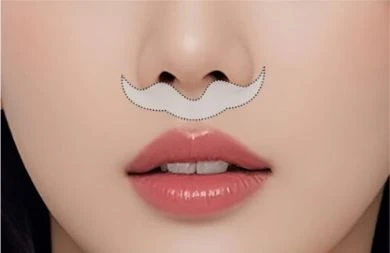
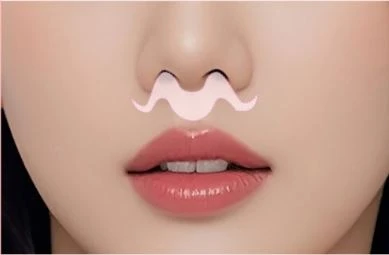
Shortening the philtrum proportionally adjusts the mid-face, making the area between the eyes and lips appear more compact and youthful.
The procedure naturally rolls the upper lip outward, maximizing its volume and creating a plumper appearance without filler.
Depending on anatomy, the incision can simultaneously reduce nostril width or correct nostril asymmetry.
By shortening the philtrum and adjusting lip shape, the mouth corners can appear subtly upturned, creating a friendlier resting expression.
Your surgeon measures your facial proportions and designs the incision area to match the ideal 1:2 ratio between philtrum and lower face.
A precise incision is made along the nostril base. The designed amount of excess skin is removed according to the pre-operative plan.
The skin is lifted and sutured in a double layer, pulling the lip upward while concealing the incision inside the nostril base for minimal visible scarring.
Immediate visible shortening. The C-curl line, fuller upper lip, and balanced proportions are apparent from day one, continuing to refine as swelling subsides.
Born with a longer-than-average distance between the nose and upper lip, creating an elongated mid-face appearance.
The philtrum naturally elongates with age as collagen decreases and tissue sags, contributing to an older appearance.
The face appears unbalanced due to philtrum length, even if other features are well-proportioned.
After jaw or facial contouring surgery, the philtrum may appear relatively longer and benefit from reduction.
Ideal candidates are those with a long philtrum (typically over 15mm), thin upper lip, or age-related lip drooping. It's also effective after jaw contouring when the philtrum appears relatively longer. A virtual consultation with photos can confirm your candidacy.
The surgery is performed under local anesthesia, taking under 30 minutes. A small strip of skin is precisely removed at the base of the nose, then sutured in a double layer to lift the upper lip and shorten the philtrum.
The incision is placed in the natural crease at the base of the nose, then sealed with double-layer closure inside the nostril. By 2–3 months, the scar typically becomes typically not noticeable.
Typically 3–5mm, which creates a significant visual difference in facial balance. The exact amount is customized based on your facial proportions to achieve the ideal 1:2 ratio between philtrum and lower face.
Sutures are removed at day 5–7, and most patients feel comfortable returning to social activities within 7–10 days. Swelling peaks around days 2–3 and subsides within 2 weeks. The final result settles over 2–3 months.
Fillers add volume but cannot shorten a long philtrum or change the lip's structural position. A lip lift on a long-term basis reshapes the ratio between nose and lip, producing a natural result that fillers cannot replicate.
Risks are minimal with an experienced surgeon. Temporary numbness and mild swelling are the most common side effects. Serious complications such as asymmetry or hypertrophic scarring are uncommon.
Yes. Philtrum reduction is commonly combined with rhinoplasty, face lift, or lip corner lift for comprehensive facial harmony. Combining procedures reduces total recovery time compared to separate surgeries.
Yes. Unlike fillers that dissolve over time, a lip lift structurally changes the position of your upper lip. Natural aging may cause subtle changes over decades, but the shortened philtrum ratio is maintained on a long-term basis.
We recommend 7 days: consultation and surgery on day 1–2, recovery days 3–5, suture removal on day 5–7. After returning home, follow-up care is available via WhatsApp video consultation.
Send us your photos and goals. We'll typically reply within 24 hours with a personalized assessment.