
Rhinoplasty
Achieve facial harmony with a nose shaped to complement your unique features.
Achieve facial harmony with a nose shaped to complement your unique features.
At Link Plastic Surgery in Gangnam, Seoul, rhinoplasty is performed by board-certified surgeons Dr. Sung Ha Min and Dr. Jung Min Su using autologous cartilage grafts. Each procedure is individually planned based on the patient's nasal structure, facial proportions, and breathing function. The surgeons combine silicone implants for the bridge with cartilage (ear, septum, or rib) for the tip to achieve natural, lasting results tailored to each patient's ethnicity.

1 to 2 hours depending on the scope. Simple bridge augmentation is shorter; combined bridge, tip, and alar work takes longer.
Nasal splint removed at 7 to 10 days. Swelling subsides noticeably within 2 weeks. Most patients return to daily activities in about 14 days. Final shape refines over 3 to 6 months.
IV sedation (sleep anesthesia). You remain comfortably asleep throughout the procedure.
Permanent structural change. Silicone maintains bridge height; cartilage grafts ensure a natural, stable tip that ages well over time.
The surgical approach is chosen based on the complexity of your case and the changes needed.
Each procedure is customized. Below are common rhinoplasty types we perform.
Silicone implant raises a flat or low bridge, creating definition and a sharper profile from the side.
Autologous cartilage refines a bulbous or drooping tip. Creates projection, definition, and a natural contour.
Dorsal hump is shaved down for a smooth, straight bridge profile. Often combined with tip refinement.
Lengthens a short nose and lowers the tip angle to reduce visible nostrils. Uses cartilage extension grafts.
Straightens a crooked nose by correcting the septum and nasal bones. Improves both appearance and breathing.

Dr. Jung or Dr. Sung examines your nasal structure, skin thickness, and facial proportions. Using golden ratio analysis, they design a nose shape that harmonizes with your face. Your preferences, concerns, and lifestyle are discussed in detail.
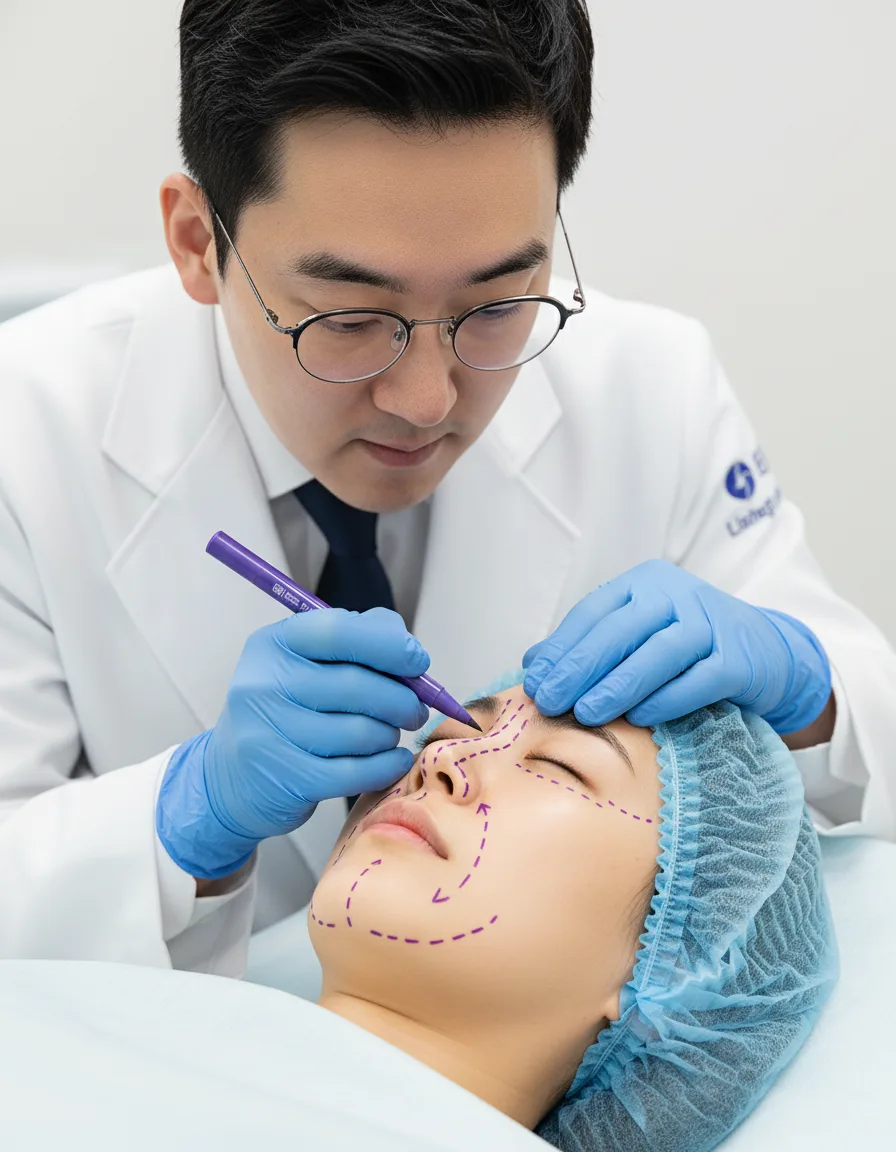
The implant type, cartilage source (ear, septum, or rib), and approach (open vs. closed) are selected. Bridge height, tip angle, and nostril width are planned with precision.
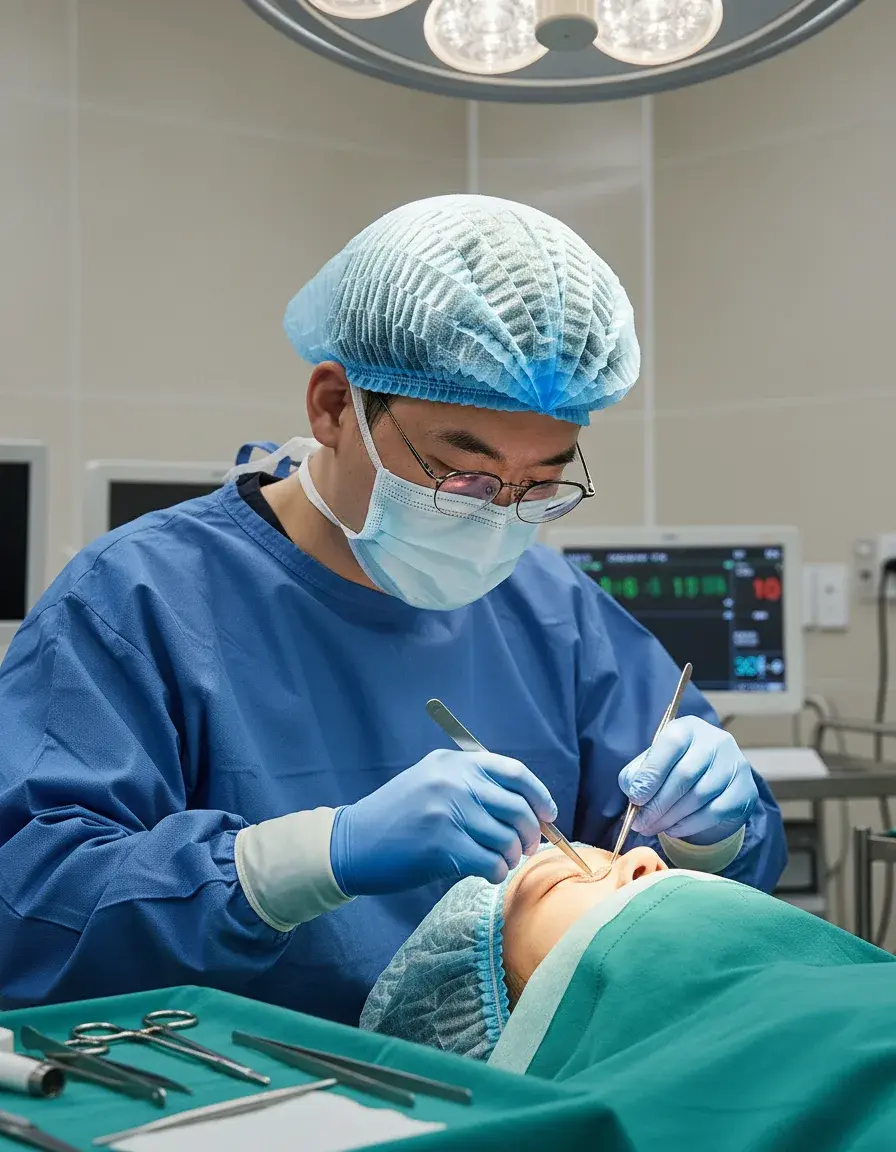
Under IV sedation, the implant is placed along the bridge and cartilage grafts are sculpted for the tip. The procedure takes 1 to 2 hours. A nasal splint is applied to protect the new shape during healing.

Splint removal at 7 to 10 days. Avoid glasses and strenuous activity for 4 weeks. Swelling reduces noticeably within 2 weeks, with the final refined shape emerging over 3 to 6 months.
Our surgeons explain procedures, share insights, and discuss real patient cases.
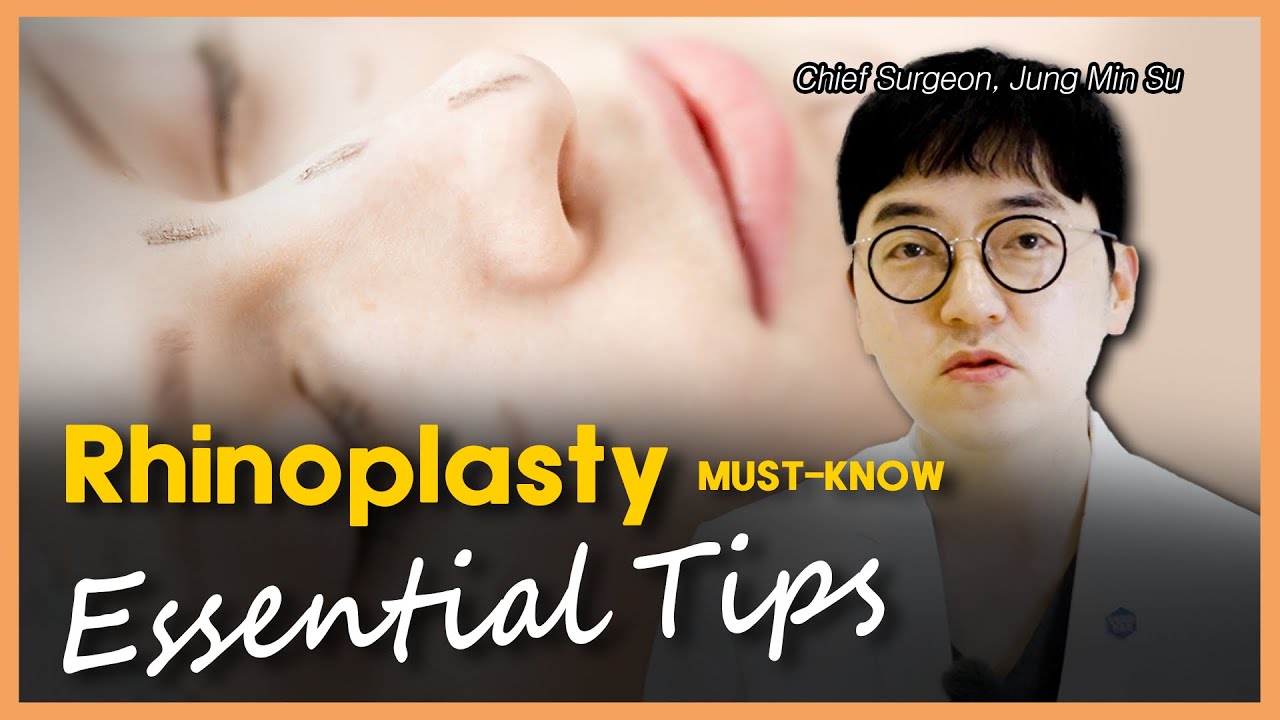

The best material depends on your anatomy, skin thickness, and surgical goals. Silicone implants can provide stable bridge augmentation, but they carry risks such as shifting, visibility under thin skin, or capsular contracture. Autologous cartilage (your own tissue) is generally more biocompatible and preferred for tip refinement and structural support. In many cases, we use a combination — an implant for the bridge and cartilage grafting for the tip — but the plan is always individualized.
Common sources include the septum, ear, and rib. Septal cartilage is often preferred when enough is available because it is straight and requires no separate donor site. Ear cartilage is commonly used for tip refinement because it is flexible and naturally curved — the incision behind the ear is well hidden. Rib cartilage may be needed in complex or revision cases when more structural support is required, though it involves a small chest incision.
Our goal is to create a nose that fits your facial features, skin type, and personal aesthetic goals. Rather than applying a single formula, we use detailed facial analysis and your preferences to plan a result that looks balanced and natural for you. We respect ethnic features and avoid an over-projected or artificial appearance. Clear preoperative communication is essential to align expectations.
Yes. When breathing problems are caused by structural issues such as a deviated septum, nasal valve collapse, or turbinate enlargement, functional correction can be performed during the same procedure. However, not all breathing problems are structural — allergies or mucosal conditions require separate evaluation. A proper examination determines whether combined surgery is appropriate.
The splint is usually removed after 7 to 10 days. Most visible bruising and early swelling improve over the first 2 to 4 weeks. However, the nose — especially the tip — continues to refine for many months. Final healing often takes 6 to 12 months, and sometimes longer in patients with thick skin or revision surgery.
Most international patients stay 10 to 14 days so we can monitor early healing and remove the splint and stitches. Longer stays may be recommended for revision cases or combined procedures. After returning home, we offer remote follow-up via photos and video consultation.
Minor asymmetry and swelling are common during the early healing phase, so final judgment should wait until the nose has healed more fully. If you remain unsatisfied, revision rhinoplasty may be considered — typically after 6 to 12 months. However, problems such as infection, implant issues, or breathing difficulty require prompt evaluation. Learn more about revision rhinoplasty →
Book a free consultation. Share your goals and photos with our team.
Get a Free Consultation